
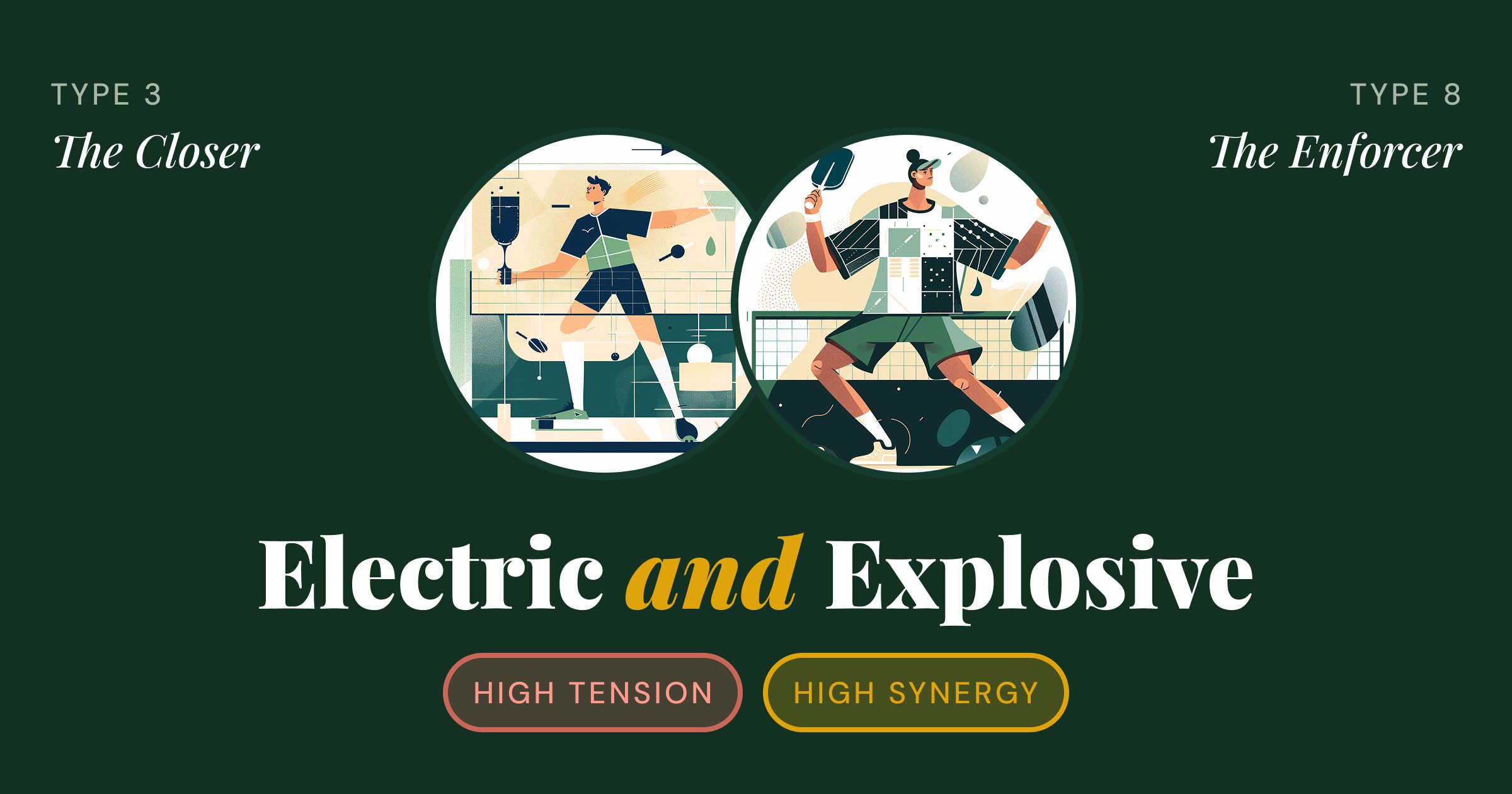
Reese walked onto the court like they had somewhere to be afterward.
Warm-ups were crisp. Two minutes of groundstrokes, four volleys at the kitchen, done. Drew was already there, planted at the net, cracking drives at the far fence. Nobody had asked them to do that. They just were.
Before the match started, Drew looked over: “I’ll poach anything middle. You cover your side and don’t let them reset.”
It wasn’t a question.
Reese smiled, just slightly. “Same.”
They went up 8–3 in the first game.
Nobody on the sidelines was quite sure what they were watching. It wasn’t coordination exactly — they hadn’t practiced a play together. It was something more like recognition: two people who immediately understood that the other one was serious, and decided, in about forty seconds, that they could work with that.
So What’s Actually Happening Here?
The Closer came to this partnership the way they come to everything: prepared to perform. They’ve thought about their opponents, scanned for patterns, and arrived with a version of this match already running in their head. They’re competitive in a way that’s quiet until it isn’t — calm before the score gets tight, sharper when it does. Winning matters, and they’re not apologetic about that.
The Enforcer came to this partnership the way they come to everything: ready to lead. They take up space on the court — physically, verbally, energetically. They’re direct, protective of the team, and fully committed from the first rally. They don’t need to like you to play hard for you. But if they respect you? They’re one of the most powerful partners in the game.
This pairing works — when it works — because neither person flinches. The Closer can match the Enforcer’s intensity without shrinking. The Enforcer can respect the Closer’s drive without needing to override it. They’re the rare doubles team where both partners understand that winning actually matters, and neither has to perform that belief for the other.
When it doesn’t work, it’s because two people who are both used to running things ended up on the same side of the net and never figured out who was driving.
The Closer on the Court
The Closer’s gift is performance under pressure. When the match tightens, something in them actually settles — the competitive environment is where they feel most capable, most clear, most themselves. They read opponents well. They adapt. They rarely make the same mistake twice.
The shadow is that their relationship with losing is complicated. When the team struggles, the Closer’s instinct is to fix — which can come out as subtle over-coaching, a tightening of their own game that cuts their partner out, or a quiet but palpable frustration that doesn’t name itself as frustration. They’re not cold. They’re managing.
The deeper thing: the Closer is always aware of how the team looks from the outside. There’s an image layer running underneath the competitive one — are we performing well, are we credible, are we a team worth watching? It’s not vanity. It’s just how they’re wired. And when their partner does something that disrupts the image — a reckless shot, a blown setup — it registers harder than the Closer will usually admit.
The Enforcer on the Court
The Enforcer’s gift is certainty. They don’t second-guess their shot selection. They don’t wait to be invited into a play. They call the ball, own the middle, set the intensity — and partners who can work with that, who can feel the confidence rather than be overwhelmed by it, tend to play their best pickleball beside an Enforcer.
The shadow is that their directness is calibrated to their own register, not their partner’s. A comment that barely registers for the Enforcer — “that was the wrong call” — can land very differently for someone who is already running a background process about their own performance. The Enforcer isn’t trying to wound. They’re just communicating in the most efficient format they know.
The deeper thing: the Enforcer’s protection instinct is real and powerful. When they trust a partner, they go all in — they cover more court, they fight harder, they dig in at moments where other players would fold. But trust is not assumed. It’s earned point by point. And until it is, the Enforcer may play in a way that inadvertently shrinks their partner’s role without realizing it.
A Match You’ve Probably Seen (or Lived)
Second game. Score’s slipped to 5–7.
Their opponents have figured something out: keep the ball away from Drew at the net. Long crosscourt dinks to Reese’s backhand. Nothing flashy — just patient. It’s working.
Drew shifts. Starts poaching more. Calls a ball at the centerline that Reese had covered. Then another. I’ll handle this. It’s not a decision exactly, just an instinct — when things are going sideways, take more. Fix it.
Reese notices. And something goes quiet.
Not the visible kind of quiet — they’re still moving, still hitting, still playing. But the problem-solving layer has dimmed. Drew doesn’t trust me on this side. And now, instead of reading their opponents, Reese is half-reading their partner. A part of their attention has relocated from the ball to the question: are we okay?
They get the game back, eventually. Win it 11–9. Walk to the bench without talking.
Technically, they won. But something’s unresolved between them, and both can feel it. Drew is thinking about the pattern they broke. Reese is thinking about the moment Drew stopped including them.
Neither says anything.
That’s the match they should have talked about after — not the score.
When the Pressure Hits
Under real pressure — a third game, a tight deficit, a match that shouldn’t be this close — both types intensify. They just intensify differently.
The Enforcer turns up the volume. More aggression, more calls, more movement. When things go wrong, the Enforcer’s instinct is to take over — not out of malice but out of a deep drive to solve the problem through force. From their side, it feels like leadership. From the Closer’s side, it can feel like being managed.
The Closer turns inward. Recalculates. Gets tighter in their own game, more deliberate, more controlled. They stop improvising and start executing — which is genuinely effective, but can look like disengagement to a partner who reads presence through energy and volume.
So: Enforcer escalates. Closer retreats inward. Enforcer reads that as disengagement. Enforcer escalates further.
Both players are doing exactly what they’re built to do. But it’s pointed at each other instead of the opponents.
The break in the pattern is usually something small: the Enforcer offers one moment of explicit inclusion — “your call on the next middle ball” — and the Closer’s full focus comes back online. That’s genuinely all it takes. One signal that the partnership is still the unit, not just the Enforcer carrying the Closer. When the Closer feels trusted, they play like themselves again. And a Closer playing like themselves is exactly the partner the Enforcer wanted.
When They’re Playing Their Best Game
At their best, this is a team that scares people a little.
The Enforcer opens the court. Power, presence, relentless net pressure. They don’t give opponents easy resets. They force decisions. And when the Enforcer is operating at full intensity with a partner they trust, there’s an almost physical effect on the other side of the net — things get harder to manage.
The Closer directs the frame. They read what’s working and what isn’t, call the adjustment, identify the opponent’s weakness, and execute at exactly the right moment. They give the Enforcer’s intensity somewhere to land — not absorbing it, but channeling it into point construction.
Together, they make a team that is simultaneously hard to overpower and hard to outthink. When both players have clarity on their roles — the Enforcer owns the court’s energy, the Closer owns the game’s direction — they become remarkably difficult to beat.
What makes this partnership special when it clicks is that neither player had to become less themselves. The Enforcer didn’t have to soften. The Closer didn’t have to perform more emotion. They just agreed, implicitly or explicitly, on who drives what. And in that agreement, they stop competing with each other and start competing together.
Practical Takeaways
If you’re the Closer (Type 3) in this partnership:
Your internal recalibration under pressure looks like withdrawal to your partner. The Enforcer reads body language as commitment level — so when you go quiet, they wonder if you’ve checked out. Give them a signal, even a small one. A single word. A look that says I’m still in this. It costs you almost nothing and keeps them from over-compensating in a way that shrinks your role.
Also: the Enforcer’s blunt corrections are not verdicts on your performance. They’re just their communication style. Receiving them as data instead of judgment will free up a significant amount of the mental space you’re currently using to manage your reaction to them.
If you’re the Enforcer (Type 8) in this partnership:
The Closer is almost certainly more aware of the match situation than you’re giving them credit for. When you poach a ball they had covered, or call an adjustment they were already making, you’re not helping — you’re introducing doubt. Trust what their play is already showing you.
And slow down on corrections between points. One is useful. Two in a row is a pattern that tells them you don’t trust them. Give them the room to execute, and most of the time, they will.
The reframe for both:
The question this partnership gets stuck on is who’s in charge. That’s the wrong question. The right question is who’s in charge of what. The Enforcer owns the court’s energy, presence, and intensity. The Closer owns the strategic read, the adaptation, the game-level thinking. When each player owns their domain and respects the other’s, the “who’s leading” tension disappears — because you’re both leading, just different things.
That distinction is the whole difference between a collision and a championship.
Try the Partnership Lab
Curious how your specific pairing plays out? The Partnership Lab breaks down your court chemistry in full — what works, what creates friction, and the one thing to say before you play.
Don’t know your type yet? → Take the QUEST
More Court Chemistry
Curious how your type plays with others? Explore the full series:
Leave a Reply