
Post 2 of 9 in the Dink Deeper Type Profile Series
You feel them before you see them.
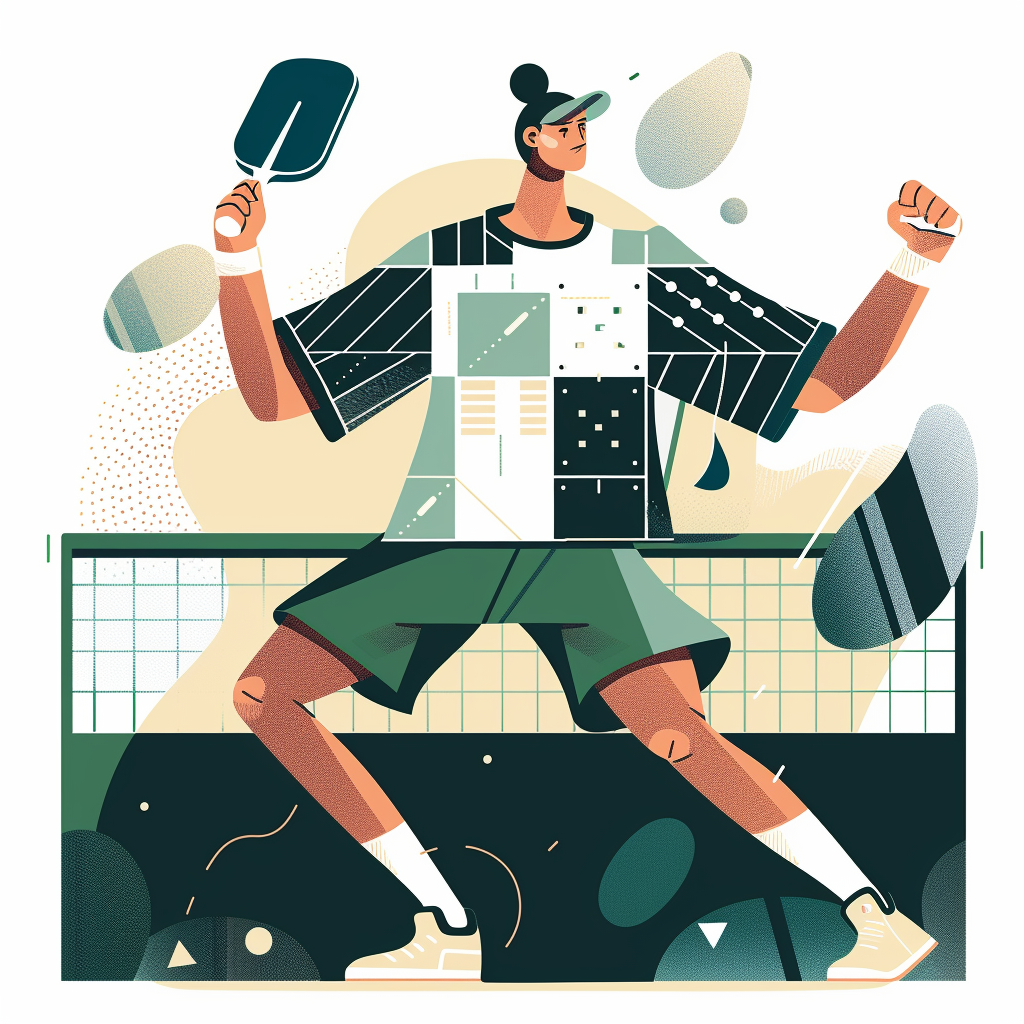
They walk onto the court and something shifts in the air — the other team stands up a little straighter, the warm-up gets quieter, the easy banter that was happening thirty seconds ago finds a different register. The Enforcer hasn’t said anything yet. They don’t need to.
When the game starts, they’re everywhere: calling the ball, taking the middle, serving hard and moving forward immediately like the net is already theirs. Their partner is either energized by it or quietly trying to figure out how to take a shot without getting an elbow to the ribs.
This is what it’s like to share a court with a Type 8 — The Enforcer — at full intensity. And understanding what’s actually driving that intensity — not aggression, not arrogance, but a deeply wired need to be in control and to protect — is the whole map for playing beside one.
So, Who Is The Enforcer?
The Enforcer moves through the world with a kind of force that most people work up to only when they’re angry. For an 8, it’s the baseline. They’re not trying to dominate — it’s just that not being in control feels genuinely dangerous to them in a way they’ve rarely had to put into words.
What drives them: Power, autonomy, and the ability to protect the people they’re loyal to. They don’t want to be controlled, and they don’t want to be vulnerable. What they do want — beneath all the intensity — is to be trusted.
What they’re quietly afraid of: Being betrayed or blindsided. The intensity, the directness, the need to lead — a lot of it is armor. An Enforcer who’s been let down before will make sure it never happens twice.
Their pattern on the court: Taking charge early, testing their partner to see if they can handle it, and going all in once they decide you’re worth going all in for. The challenge is that the test isn’t always announced.
In everyday life, you probably recognize the Enforcer as the person who:
- Walks into rooms and immediately understands the power dynamics
- Says what everyone else is thinking but won’t say
- Will go to the mat for someone they love without being asked
- Has a hard time with partners or colleagues who they experience as weak — not because they’re cruel, but because they need to know the person beside them can hold their own
The Enforcer on the Pickleball Court
Pickleball gives an Enforcer a lot to work with. The game rewards decisive movement, physical presence, and the willingness to take the ball in the middle — all things an Enforcer does by default. When they’re dialed in, they can be genuinely thrilling to play alongside.
What they bring to a partnership:
- Court presence that affects the other team before the game even starts
- Decisive, fast decision-making — no hesitation, no second-guessing
- Fierce protection of their partner’s side and space
- Clutch performance: Enforcers don’t wilt under pressure, they expand into it
- Directness that, when it lands right, makes a partnership run clean and efficient
- The energy of someone who is here to win, and who takes that personally on your behalf
The shadow side (every great player has one):
- The decisiveness can become unilateral — calling shots, poaching, and redirecting without checking whether that’s what the partnership needs
- Under pressure, the instinct to control can shrink their partner’s game rather than expand it
- Feedback arrives as blunt fact, which is fine when things are good and can feel like a verdict when things aren’t
- The protection instinct can curdle into something that feels like control from the inside
- When they lose confidence in a partner, they may stop involving them — not out of cruelty, but because they’ve quietly decided to carry the match themselves
A Match You’ve Probably Seen (or Lived)
Jordan is an Enforcer. They’ve been playing for two years, improved fast, and have a particular style that people either love or find exhausting: loud, decisive, always moving forward. They’re the player who calls “mine” on a ball that’s technically in the middle of the court, and they’re usually right to call it.
Their partner, Avery, is solid. Steady. Not flashy, but reliable — the kind of player who makes few unforced errors and reads the game quietly and well.
Through the first game, Jordan is at their best: energizing, decisive, protective of Avery’s side in ways that feel genuinely supportive. Avery feels covered. The partnership hums.
Then they go down 4-9 in game two.
Jordan doesn’t say anything dramatic. But the energy changes. The balls in the middle start going to Jordan automatically — not out of strategy, but out of a rising urgency that doesn’t pause to calculate. Jordan starts serving wider, going for harder third shots, taking over in the subtle ways that Enneagram 8s take over when they stop trusting the situation. Avery, who was playing well, finds themselves hitting fewer balls. Then fewer still.
Avery goes home wondering if Jordan actually sees them as a partner, or just as a person who gets to stand on the same side of the net.
What’s really going on:
For Jordan, taking over isn’t dismissal — it’s protection. When things go wrong, the instinct is to place their body between the problem and the people they’re with. The idea of losing because Avery missed a ball feels, somehow, worse than losing because Jordan made a mistake. At least then it was in their hands.
What Jordan hasn’t examined is that Avery doesn’t need to be protected. Avery needs to be included.
The protection that is an Enforcer’s deepest gift can, without self-awareness, become the thing that makes their partners feel the most alone.
When the Pressure Hits
When an Enforcer is stressed — when the match is slipping, when the opponents are better than expected, when their partner makes the error that lets the other team take a lead — they don’t go quiet the way some types do. They go louder.
The directness sharpens. The poaching increases. The subtle coaching that was already happening starts to feel less subtle. They take up more space precisely when the partnership needs room to breathe.
And here’s what’s underneath it: an Enforcer under pressure is trying to do something genuinely good. They’re trying to fix it. The problem is that fixing it, for an 8, usually means taking control — and control, in a partnership, has limits.
If you’re playing with an Enforcer who’s just gotten more intense in a way that’s starting to crowd you: that’s not contempt. That’s what it looks like when someone who needs to fix things can’t find the fix yet.
When They’re Playing Their Best Game
An Enforcer at their best is one of the most compelling players in recreational pickleball — not because they’re winning, but because of what they bring to the person beside them.
The growth move for an Enforcer is learning to extend their protection instinct to the partnership itself, not just the match. When that clicks, the decisiveness doesn’t disappear — it gets directed. Instead of taking over, they start opening things up: calling the strategy clearly, explicitly handing Avery the shot they’ve been deferring to Jordan, trusting that a partner who can hold their own is actually more useful than a partner who needs to be managed.
The intensity that usually feels like pressure becomes the thing that makes the partnership feel genuinely safe. You know Jordan’s not going to fold. You know they have your back. And now — you also know they actually want the ball.
An Enforcer who’s leveled up doesn’t stop taking up space. They just make room. That is, quietly, one of the most generous things a player like this can do.
Practical Takeaways
If you are an Enforcer — one question worth asking in the middle of a match:
“Am I taking this ball because I should, or because I need to?”
Not as self-criticism — as information. There are plenty of times you should take it. There are also times your partner was in position, had the better angle, and you took it anyway because the match felt like it needed to be in your hands. Those two categories are different. An Enforcer who can feel the difference in real time is one who their partners trust completely.
If you play with an Enforcer — how to actually get through to them:
Don’t hedge and don’t apologize. An Enforcer interprets hesitation as weakness and weakness as a reason to take over more. If you need something on the court — more balls, fewer unsolicited calls, a different strategy — say it directly and mean it: “I’m open on the line, let me take that shot.” Directness is the only language that lands cleanly with an 8. They will respect the ask more than you expect.
The reframe:
An Enforcer’s intensity isn’t aggression — it’s loyalty expressed through force. The same drive that can make a partner feel overshadowed is the drive that will absolutely not let the other team win in the third game when you’re up 10-9. The goal for an Enforcer and their partner isn’t to dial that down. It’s to build the trust — on both sides — that makes all that force feel like it’s working for the partnership, not around it.
Court Chemistry: Playing With (or Against) a Type 8
Every pickleball personality brings a different dynamic to a partnership — and how an Enforcer plays with each type is its own story. Some combinations bring out the Enforcer’s loyalty and fire in ways that make a genuinely formidable team. Others surface the control pattern in its least helpful form.
We cover all of it in the [Court Chemistry Guide →] — a full breakdown of how The Enforcer pairs with every pickleball personality type, including the one conversation to have before you play together.
Already know your type? Try the [Partnership Lab →] to generate a personalized compatibility report for you and your partner.
Not sure what your pickleball personality type is yet? Take the QUEST — a two-question quiz built specifically for pickleball players. Link in bio.
— Dink Deeper
Read more

Find out your Pickleball Personality type
Take our tailored quiz to see what your type is
Leave a Reply