
Post 9 of 9 in the Dink Deeper Type Profile Series
You’re down 3-8 in the third game. You’ve been grinding for forty-five minutes. Your team hasn’t won three consecutive points since the first game.
Your partner calls time, bounces over to you, and says — with a grin that genuinely confuses you — “okay, here’s what we’re going to do.”
What follows is a plan that is somehow both completely unhinged and, on reflection, worth trying. They’ve noticed something about the opponents’ side switching that you missed entirely. They want to try lob-and-poach on the next three points. And they’re already moving back into position like the score says 8-3 in your favor.
You win five straight.
Later, when someone asks how you came back from 3-8, neither of you will be able to fully explain it. But you were there. You felt the moment your partner decided the match was still alive — and something in that decision made it true.
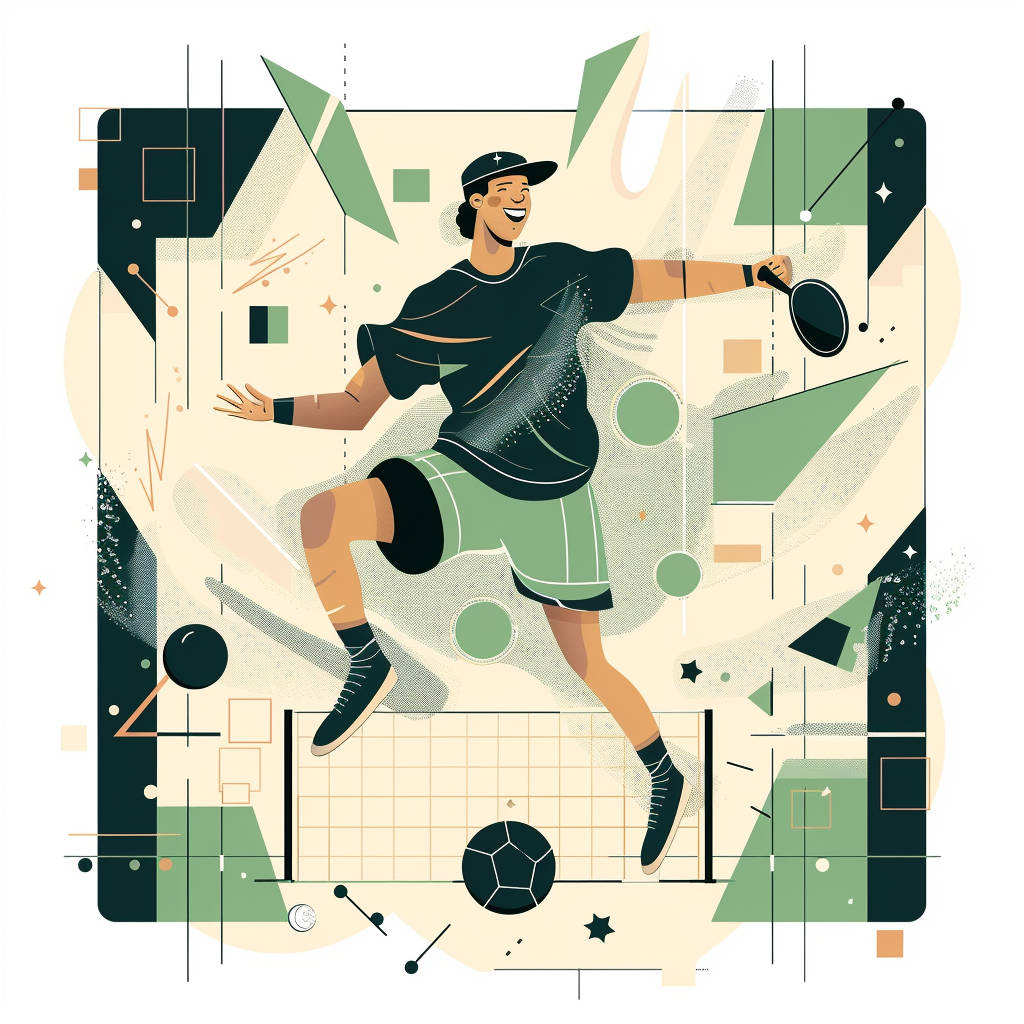
This is what it’s like to play alongside a Type 7 — The Rally Cat — when they’re in their element. And understanding what’s actually driving that energy is the whole map for partnering with one.
So, Who Is The Rally Cat?
The Rally Cat moves through the world — and through pickleball — oriented toward the next interesting thing. Possibility. Adventure. The next point, the next match, the next court they haven’t tried yet. This isn’t restlessness exactly; it’s more like a metabolic orientation toward what’s good and alive in any given moment.
What drives them: Experience, variety, and the pleasure of being fully alive in something. They want the game to be fun — which doesn’t mean frivolous. It means real, present, and worth being in.
What they’re quietly afraid of: Being trapped in pain, boredom, or limitation with no way out. The discomfort of a failing match, a grinding drill, or a partnership that feels heavy — The Rally Cat’s instinct when these things arrive is to move. Toward something better, lighter, more interesting.
Their pattern on the court: Spontaneous, energetic, adaptable. The first player to change the emotional weather when the team is down. The one who can make a tough match feel survivable — and occasionally, against all logic, turnable. When the energy is channeled, they’re one of the most dynamic players in recreational doubles. When it’s scattered, they’re the most fun partner to lose with.
In everyday life, you probably recognize The Rally Cat as the person who:
- Brings energy to everything they do, often before other people have decided whether to be interested
- Hates being in extended negativity — changes the subject, finds the upside, moves on quickly
- Is better at starting things than finishing them — “what’s next” is always present
- Has a hard time with repetition for its own sake; finds the novel angle, the variation, the reason today is different from yesterday
The Rally Cat on the Pickleball Court
Pickleball rewards adaptability, creative shot-making, and the ability to recover fast — all things a Rally Cat does naturally. They’re often the player who spots the unexpected angle before anyone else, who finds the opening in a scramble point that looked impossible, who can single-handedly change the momentum of a match just by deciding to.
What they bring to a partnership:
- Infectious energy that makes the match worth being in, even at 3-8 in the third
- Creative shot-making that opponents can’t fully prepare for — because The Rally Cat sometimes surprises themselves
- Recovery speed after errors that is genuinely remarkable — bad points don’t stick
- The ability to change the emotional weather of a match when it needs changing
- Genuine flexibility: they’re not attached to the game plan that isn’t working, and they’ll find the new one
The shadow side (every great player has one):
- The game plan that existed through two games can evaporate in the third when something more interesting presents itself
- Creative shots hit at the wrong time — the erne on a ball they should have reset, the ATP attempt at 9-10 in the third
- After a loss, the debrief may never fully happen — The Rally Cat has already pivoted to lunch or the next match, and the pattern that cost them goes unexamined
- Partners who need a predictable anchor can find the variability exhausting over the course of a long match
- The discipline work — thirty identical dink repetitions, the same reset over and over until it’s automatic — is exactly the kind of activity their nervous system resists
A Match You’ve Probably Seen (or Lived)
Jamie is a Rally Cat. They play three times a week, know almost everyone at the courts by name, and bring an energy that makes any drop-in session feel like the best one in recent memory. Their game is creative and highly readable when things are going well — unpredictable in the best possible sense.
Morgan, their regular partner, is steady and disciplined. Morgan has been working on their reset game for six months. Morgan has opinions about when to go for it and when to play the percentages. Morgan genuinely loves playing with Jamie — and also, by the third game of most matches, is holding back something they haven’t figured out how to say.
Here’s how a typical third game goes: Jamie and Morgan have a plan. It’s a good plan — they agreed on it between games, it’s been working, they’ve executed it reasonably well. Then, around 5-4, Jamie sees something. An opening. An opportunity. It’s not in the plan, but it’s right there, and Jamie is already going for it before the decision has fully formed.
It doesn’t work. Morgan sets back up without saying anything. The plan holds for two more points. Then Jamie sees something else.
By 8-6, the plan is gone. Jamie is improvising. The shots are creative. Some of them work. Most of them work. But Morgan doesn’t know what’s coming next, has stopped anticipating correctly, and has started covering for the unpredictability rather than playing their own game. They lose 9-11.
After the match, Jamie says, “that was a fun one — want to grab food?” Morgan says sure. The pattern goes unexamined for another week.
What’s really going on:
For Jamie, the shift away from the plan wasn’t abandonment — it was responsiveness. Something changed on the court, and adapting felt like the right move. The discomfort of executing the same plan through a stretch where things are uncertain triggers something in The Rally Cat that says try something new. Not strategically, but almost physically.
What Morgan experienced was something different: their anchor pulled up. The plan they’d agreed on — the thing that made the unpredictable game feel manageable — disappeared, and nothing replaced it. And then it was over before there was a chance to name any of this.
The thing Jamie hasn’t examined is that creative freedom and partnership reliability aren’t opposites — but they require a negotiation that hasn’t happened yet.
When the Pressure Hits
When a Rally Cat is in real trouble — down late, the match slipping, their partner visibly frustrated — they do something that can confuse partners who don’t know them well: they get lighter.
The energy that was already high goes higher. The jokes arrive. The creative shots multiply. The post-point commentary gets chattier. From a distance it can look like they’re not taking it seriously. But something else is happening: The Rally Cat is, in their own way, trying to save the match. Moving is how they cope. Energy is how they solve things. Going dark and grinding isn’t in their toolkit — so they go the other direction.
For partners who need the moment to be acknowledged — to feel that the difficulty is real and shared — this can land badly. It doesn’t look like resilience. It looks like deflection.
It’s actually both. And knowing the difference is worth something.
When They’re Playing Their Best Game
A Rally Cat at their best isn’t just the most fun player on the court. They’re something more powerful than that.
The growth move for The Rally Cat is channeling the energy specifically — and trusting that depth is its own form of novelty. At higher levels of play, the soft game, the dinking rally, the patient wait for the right ball: these things are actually interesting. They’re a different kind of interesting than the erne attempt, but The Rally Cat who has done the growth work discovers that patience has its own kind of edge to it. The game doesn’t become boring when they commit to the plan — it becomes harder, in a way that activates exactly the parts of them that love a challenge.
The other part of the growth move is this: a pre-game commitment to two specific things they’ll execute regardless of the impulse in the moment. Not a rigid game plan — full creative freedom for everything else. Just two commitments. This gives The Rally Cat the structure they need to be brilliant without the cage they can’t stand.
A Rally Cat who has leveled up is one of the most valuable doubles partners in recreational pickleball. The momentum-shift capability remains. The energy remains. The creativity remains. But now the partnership can count on them — and that combination of improvisation and reliability is genuinely rare.
Practical Takeaways
If you are a Rally Cat — one thing worth trying:
Before your next match, name two specific things you’ll execute regardless of what your instincts say. Not a full game plan — just two commitments. Then play everything else exactly the way you normally would.
Here’s why it works: the two-commitment rule isn’t about constraining your creativity. It’s about giving your partner something solid enough to play against. When Morgan knows Jamie will always reset in transition no matter what, Morgan can commit fully to their own role — which makes the partnership better, which makes Jamie’s creative shots more effective. The constraint makes the freedom work.
If you play with a Rally Cat — how to actually use what they bring:
Don’t say “settle down.” That’s the wrong lever, and it doesn’t work. Instead, redirect: “I need your creativity right now, on their backhand side — what do you see?” This gives The Rally Cat’s energy a specific channel and meets them in the mode they’re already in. The discipline shows up as a byproduct of the creative assignment, not as something opposed to it.
The reframe:
A Rally Cat’s energy isn’t immaturity — it’s a genuine competitive asset when it’s aimed. The player who can change a match’s emotional weather, who makes a comeback feel possible, who won’t let a bad stretch harden into a narrative — that player is rare and worth having beside you. The goal isn’t to make The Rally Cat more methodical. It’s to build a partnership where their energy has direction, and where the two commitments are solid enough that the improvisation around them actually lands.
Court Chemistry: Playing With (or Against) a Type 7
Every pickleball personality brings something different to a partnership — and how a Rally Cat pairs with each type is its own story. Some combinations turn their energy into a superpower; others reveal exactly where the discipline work hasn’t been done yet.
We cover all of it in the [Court Chemistry Guide →] — a full breakdown of how The Rally Cat pairs with every pickleball personality type, including the one conversation to have before you play together.
Already know your type? Try the [Partnership Lab →] to generate a personalized compatibility report for you and your partner.
Not sure what your pickleball personality type is yet? Take the QUEST — a two-question quiz built specifically for pickleball players. Link in bio.
— Dink Deeper
Leave a Reply