
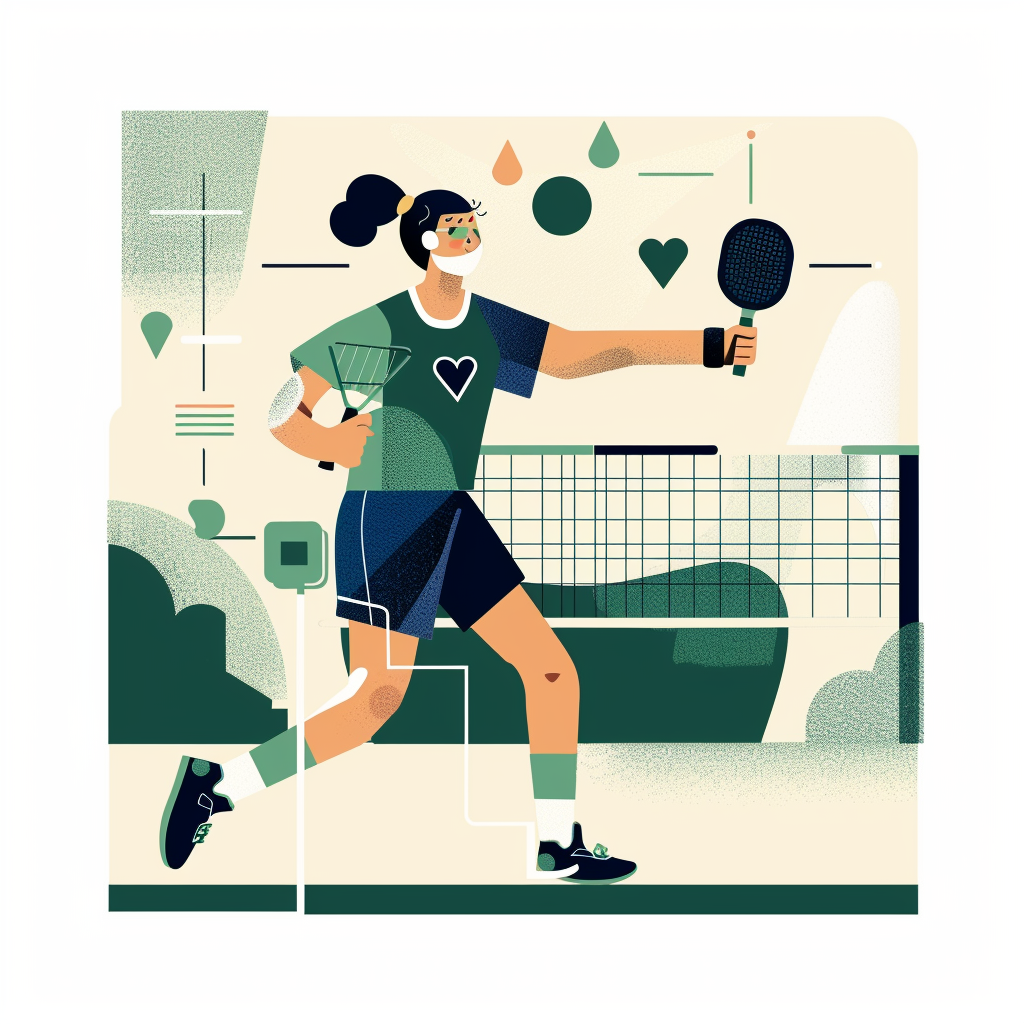
Post 3 of 9 in the Dink Deeper Type Profile Series
You’ve played with this person. Maybe you are this person.
The one who notices when their partner is off — before their partner does. Who adjusts their game not because they have to, but because they’re already reading what you need. Who celebrates your winners with more energy than their own. Who somehow makes you feel like the whole match would fall apart without you, even when they’re the one making it work.
Off the court, they remembered you take your coffee a specific way. They texted to check in after that rough loss two weeks ago. They covered the ball you should have called yours, and they said nothing about it.
This is a Type 2 — The Rally Maker — in their element. And if you’ve been lucky enough to have one beside you, you know what I mean. If you are one, you also know the part of this nobody names: how exhausting it can be to hold so much, so quietly, for so long.
So, Who Is The Rally Maker?
The Rally Maker lives, orients around, and gets their energy from connection. Not in a soft, incidental way — in a core-of-their-identity way. They learned early that being needed, being warm, being the one who shows up is how they belong. So they became very, very good at it.
What drives them: Being genuinely useful to the people they care about. Being seen as giving, warm, and indispensable. Knowing that their presence made a difference.
What they’re quietly afraid of: Being unwanted. Not needed. Taking up space without earning it. A Rally Maker who feels like a burden — or like their partner doesn’t actually need them — is a Rally Maker in distress.
Their pattern on the court: Attunement. They’re reading their partner constantly — energy, frustration, confidence — and adjusting accordingly. They’re there first, cover more than their share, and offer encouragement that feels genuine because it is. When things are good, they’re extraordinary. When they feel unseen or unappreciated, something subtle but significant starts to shift.
In everyday life, you probably know the Rally Maker as the person who:
- Remembers things about you that you forgot you mentioned
- Takes care of the logistics nobody else thought about
- Has a hard time saying what they actually want until they’ve secured that you’re okay first
- Occasionally erupts — seemingly out of nowhere — when the resentment they’ve been quietly building finally tips over
The Rally Maker on the Pickleball Court
Pickleball is a partnership sport in a way that most sports only approximate. You win together. You lose together. Your success is partly your partner’s and vice versa. For the Rally Maker, this isn’t just context — it’s perfectly aligned with how they already experience the world.
What they bring to a partnership:
- An emotional intelligence that catches problems before they become problems
- Encouragement that’s calibrated to what their partner actually needs — not generic, not hollow
- The willingness to cover, defer, or adjust their own game without being asked
- A generosity that extends even through losing streaks
- A shot selection unconsciously shaped by what sets their partner up — they’re already thinking two touches ahead of themselves
The shadow side (every great player has one):
- They rarely name their own needs, which means partners often don’t know what they are — or that they exist at all
- When they feel unappreciated, the warmth can quietly curdle into something that reads, from the outside, like emotional withdrawal or passive frustration
- They may avoid calling their preferred side, taking the shot that’s rightfully theirs, or asserting a tactical opinion — not because they don’t have one, but because asserting feels uncomfortably close to demanding
- They can absorb their partner’s emotional weather — frustration, stress, negativity — without naming that they’re doing it, until it catches up with them
- The resentment, when it comes, often arrives as a surprise to everyone involved — including the Rally Maker themselves
A Match You’ve Probably Seen (or Lived)
Morgan is a Rally Maker. They’ve been playing recreational doubles for three years, know most of the regulars by name and preferred side, and are genuinely well-liked in the group — the kind of player people ask to play, not because they’re the most dominant, but because something about playing with them just works.
Their partner, Avery, is solid — consistent, competitive, privately a little more focused on their own game than the partnership dynamic. Not unkind. Just internally oriented.
When they’re winning, Morgan is lit up. The partnership feels easy and reciprocal. Morgan covers the middle, sets Avery up with patient dinks, says “great shot” and means it every time.
When they’re losing, something quieter happens. Avery goes a little internal — analyzing, recalibrating — and Morgan reads the shift immediately. Starts trying harder. Covers more. Gives more encouragement, more coverage, more energy — trying to compensate for something they can’t quite name.
Avery doesn’t notice any of this. They’re focused on the match.
After a tough loss, Avery says “we’ll get them next time” and starts checking their phone. Morgan says “yeah, definitely” and begins the long, quiet drive home with a feeling they couldn’t fully articulate if asked: not hurt, exactly. Not angry. Something more like invisible.
What’s really going on:
Morgan’s generosity on the court isn’t calculated — it’s genuine. But generosity at that level has a cost, and that cost needs to be acknowledged somewhere. Avery’s distraction after the loss wasn’t dismissiveness — it was just how Avery processes. But Morgan doesn’t have that data. They only have the absence of reciprocity where they’ve been pouring presence.
The thing neither of them has named: Morgan has needs on the court. They just haven’t said them. And they may not say them until the resentment is already large enough to be its own problem.
When the Pressure Hits
When a Rally Maker is stressed — losing a match that matters, feeling like their partner isn’t fully with them, sensing that their effort isn’t landing — they can do something that confuses the people around them: they either over-give or they freeze.
The over-give is what you’d expect: more encouragement, more hustle, more coverage. It looks like a really great partner having a hard match. The freeze is quieter — a sudden withdrawal that comes across as disengagement but is actually the moment the Rally Maker has run out of capacity to give and doesn’t know what to do instead.
If you’re playing with a Rally Maker who has gone oddly quiet, or whose usual warmth has gone slightly flat — that’s not checked out. That’s what empty looks like when someone has been giving since the first serve.
When They’re Playing Their Best Game
A Rally Maker at their best isn’t just supporting — they’re fully in the match as a player.
The growth move for a Rally Maker is learning that advocating for themselves — saying which side they want, calling the shot that’s theirs, naming what they need — doesn’t make them less generous. It makes the partnership real instead of performing. A partnership where only one person’s needs are visible isn’t a partnership. It’s caretaking.
When they trust that their partner wants them as a player, not just a support system, the Rally Maker’s game expands. They take shots. They hold their side. They assert a tactical read. And they do it without abandoning the relational attunement that makes them so valuable in the first place — it just finally goes both directions.
A Rally Maker who’s leveled up is one of the rarest things in doubles pickleball: someone who genuinely reads and responds to their partner and shows up fully as themselves. Still warm, still generous, still the best teammate in the building. But present as a whole person, not just a provider.
Practical Takeaways
If you are a Rally Maker — one question worth asking before your next match:
“What do I actually want today — my preferred side, the shot I’ve been deferring, the tactical call I’ve been swallowing?”
Name it out loud to your partner, even briefly. Not because they should have asked — because you deserve to play your game too. The partner who truly values you wants to know. And if they don’t ask, the information is still yours to give.
If you play with a Rally Maker — what appreciation actually looks like:
Not just “great match.” Specific. “You covering that lob in the third game was the whole reason we stayed in it.” “I felt your energy every time I missed — you never let me spiral.” That specificity is the difference between being seen and being managed. A Rally Maker knows the difference immediately.
The reframe:
A Rally Maker’s generosity isn’t a flaw that needs correcting — it’s a genuine superpower that doubles pickleball is designed to use. The goal isn’t for them to care less about their partner. It’s for the caring to be mutual: for the Rally Maker to receive what they’ve been giving, and to trust that asking for it doesn’t make them a burden. It makes them a partner.
Court Chemistry: Playing With (or Against) a Type 2
The Rally Maker’s relational attunement makes them a different partner depending on who they’re beside — and some combinations bring out their best while others quietly run them dry.
We break down all of it in the [Court Chemistry Guide →] — how The Rally Maker pairs with every pickleball personality type, including the one conversation to have before you play together.
Already know your type? Try the [Partnership Lab →] to generate a personalized compatibility report for you and your partner.
Not sure what your pickleball personality type is yet? Take the QUEST — a two-question quiz built specifically for pickleball players. Link in bio.
— Dink Deeper
Read more

Find out your Pickleball Personality type
Take our tailored quiz to see what your type is
Leave a Reply